
Travel to Jordan: Ancient Wonders, Desert Landscapes and Middle Eastern Hospitality
Jordan is one of the Middle East’s most fascinating travel destinations — a country where ancient history, dramatic desert scenery, and warm hospitality come together in a surprisingly compact and accessible journey. From the rose-colored city of Petra and the cinematic landscapes of Wadi Rum to the mineral-rich waters of the Dead Sea, Jordan offers experiences that feel both timeless and unforgettable.
Traveling through Jordan often feels like moving between different worlds. One moment you are walking through Roman ruins or historic souks, the next you are driving across vast desert landscapes that seem untouched by time. Despite the country’s extraordinary historical significance, Jordan remains refreshingly approachable for travelers, with well-developed tourism infrastructure and a reputation for welcoming visitors warmly.
What makes Jordan especially compelling is the balance between adventure and culture. It is a destination where ancient civilizations, biblical history, Bedouin traditions, and natural wonders all exist within relatively short distances from each other.
Petra: Jordan’s Legendary Ancient City
Petra is without question Jordan’s most famous attraction and one of the world’s great archaeological treasures. Hidden within desert canyons and carved directly into pink sandstone cliffs, the ancient Nabataean city feels almost surreal when seen for the first time.
The approach to Petra through the narrow canyon known as the Siq is part of the experience itself. As the towering rock walls slowly open to reveal the iconic Treasury facade, the atmosphere becomes almost cinematic.
But Petra is far larger than many visitors expect. Beyond the Treasury lies an enormous archaeological site filled with tombs, temples, stairways, and ancient structures stretching across the desert valley.
Walking through Petra at sunrise or late afternoon, when the sandstone glows in shades of red, orange, and gold, creates one of the most memorable travel experiences anywhere in the Middle East.
Wadi Rum: The Valley of the Moon
Southern Jordan is home to Wadi Rum, a protected desert landscape famous for its towering rock formations, endless sand valleys, and extraordinary silence. Often called the “Valley of the Moon,” Wadi Rum has become one of the region’s most iconic adventure destinations.
The landscape feels otherworldly. Massive sandstone mountains rise from deep red desert sands, while ancient petroglyphs and Bedouin camps reveal the area’s long human history.
Many travelers stay overnight in desert camps where evenings are spent beneath remarkably clear skies far away from urban light pollution. Watching the stars emerge over the desert is one of the defining experiences of a trip to Jordan.
Wadi Rum has also become internationally recognizable through films such as Lawrence of Arabia, The Martian, and Dune, all drawn to the region’s dramatic landscapes.
The Dead Sea Experience
The Dead Sea is one of Jordan’s most unique natural attractions. Located at the lowest point on Earth, its extremely high salt concentration allows visitors to float effortlessly on the water’s surface.
The surrounding landscape creates a striking contrast between desert mountains and calm blue water. Many travelers combine relaxation at Dead Sea resorts with spa treatments and mineral-rich mud experiences that have attracted visitors for centuries.
The atmosphere around the Dead Sea feels peaceful and almost surreal, particularly during sunset when the surrounding desert reflects soft golden light across the water.
Amman: A Modern Capital with Ancient Roots
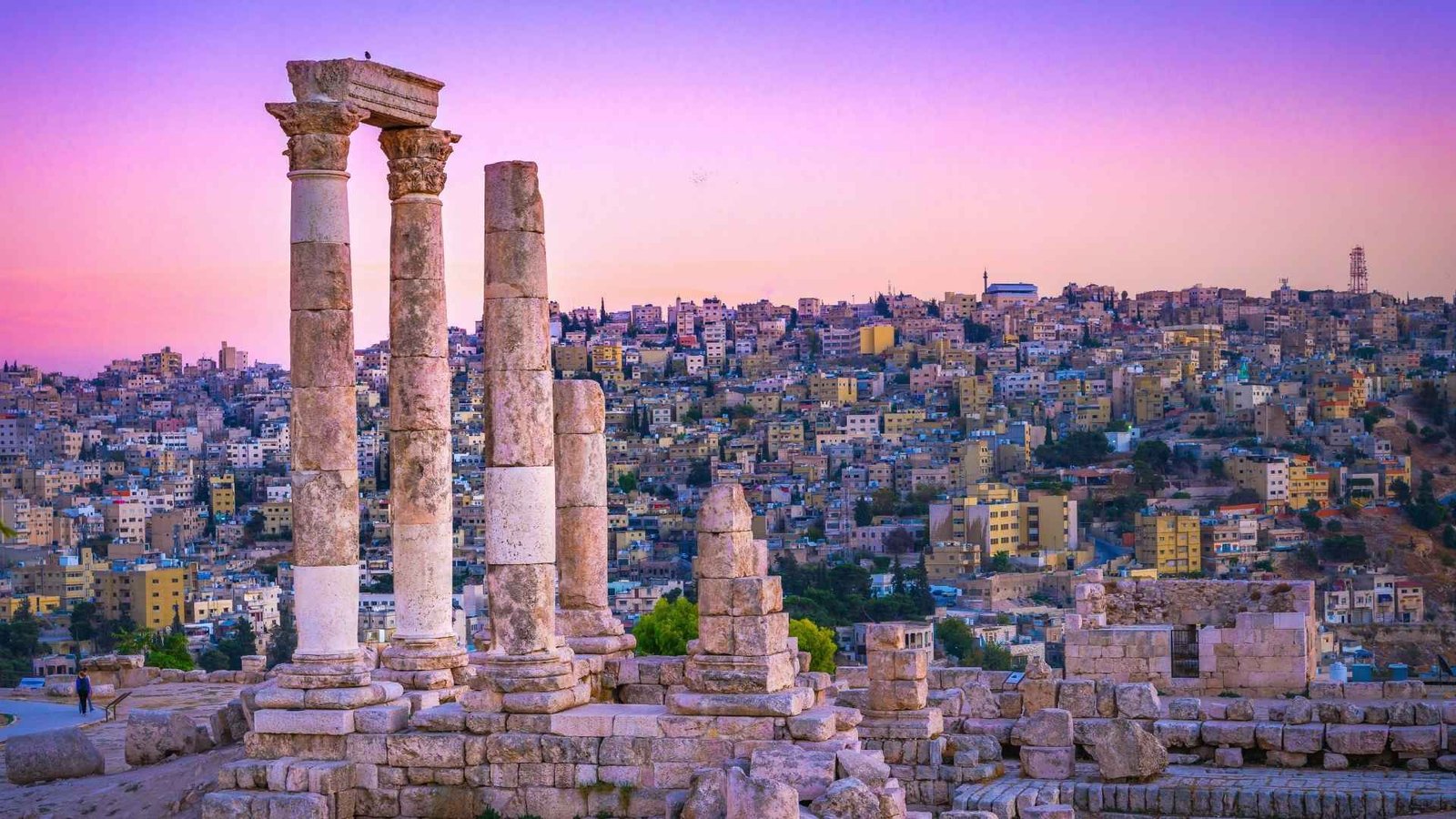
Jordan’s capital city, Amman, is often the starting point for exploring the country. Built across rolling hills, the city blends modern urban life with ancient history and traditional Middle Eastern culture.
The downtown area remains lively and authentic, filled with cafés, local restaurants, markets, and historic streets. Above the city sits the Amman Citadel, home to Roman, Byzantine, and Islamic ruins that overlook the modern skyline.
Amman also offers one of the Middle East’s most underrated food scenes. Traditional Jordanian dishes such as mansaf, falafel, hummus, and grilled meats are central to daily life, while modern cafés and restaurants continue to reshape the city’s culinary culture.
The city may not have the polished luxury of some Gulf capitals, but its energy and authenticity are part of its appeal.
Roman Ruins and Historic Sites
Jordan’s historical significance extends far beyond Petra. The ancient city of Jerash contains some of the best-preserved Roman ruins outside Italy, including temples, colonnaded streets, and amphitheaters that still host performances today.
Elsewhere in the country, crusader castles, Byzantine mosaics, and biblical landmarks reveal Jordan’s importance throughout thousands of years of regional history.
Mount Nebo, believed to be the place where Moses viewed the Promised Land, remains an important pilgrimage and historical site overlooking the Jordan Valley.
Jordanian Hospitality and Bedouin Culture
One of the defining aspects of traveling in Jordan is the hospitality. Visitors frequently describe Jordanians as welcoming, generous, and genuinely eager to share their culture with travelers.
Bedouin traditions continue to play an important role in parts of the country, especially in desert regions such as Wadi Rum. Sharing tea beneath desert tents, listening to stories, and experiencing traditional meals are memorable parts of many journeys through Jordan.
Even in modern urban areas, hospitality remains deeply rooted in everyday culture.
Adventure and Outdoor Travel
Jordan has also become increasingly popular for adventure travel. Hiking trails, canyoning routes, diving in the Red Sea near Aqaba, and multi-day desert expeditions attract travelers looking for more active experiences.
The Jordan Trail, which stretches across the country from north to south, has gained international attention among long-distance hikers seeking both cultural immersion and dramatic scenery.
When to Visit Jordan
The best time to visit Jordan is generally during spring and autumn when temperatures are comfortable for sightseeing and outdoor exploration.
- March to May: Pleasant spring temperatures and green landscapes
- September to November: Ideal weather for Petra and desert travel
Summer can become extremely hot in desert regions, while winter nights may be surprisingly cold, especially in higher elevations.
Why Jordan Is One of the Middle East’s Essential Destinations
Jordan offers an extraordinary concentration of travel experiences within a relatively small country. Ancient cities, desert landscapes, Roman ruins, biblical history, and warm hospitality combine to create a destination that feels rich in both atmosphere and meaning.
Unlike destinations focused purely on luxury or modern development, Jordan’s appeal comes from depth — the sense that every landscape and historic site carries stories that stretch back thousands of years.
For travelers seeking culture, adventure, history, and some of the Middle East’s most iconic landscapes, Jordan remains one of the region’s most rewarding journeys.
More of our travel guides to Middle East below
Other media from Leisure Media Group
- traveltalk.dk – Danish-language travel magazine covering destinations, hotels, airlines, cruises and travel inspiration from around the world
- winetalk.dk – Danish-language wine magazine with extensive coverage of wine, gastronomy and food culture
- worldsporttalk.com – international sports site covering top-level football, golf, tennis, Formula 1 and more from around the world